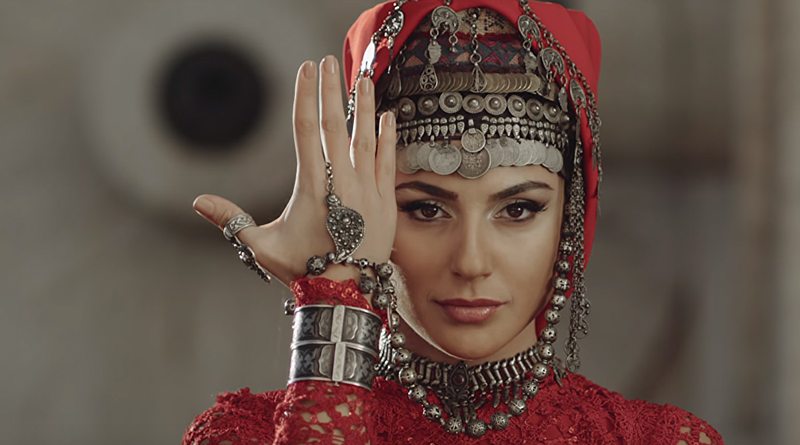
Armenians
Top 10 People With The Most Descendants Ever
Dezembro 4, 2019Plans In best writing services essaysrescue – An Introduction
Dezembro 4, 2019Armenians
But the first Armenian communities had been formally established a lot later, within the 12th and thirteenth centuries, when energetic commerce was developed between the Armenian Cilician Kingdom and the big metropolis republics of the Italian peninsula such as Genoa, Venice and Pisa. Since commerce was a lucrative trade, Italian and Armenian merchants performed a key role in sustaining Italian-Armenian ties. Armenian retailers in Florence would gather and inform stories about Armenia, the primary nation in the world that adopted Christianity as a state faith in 301 AD. These Italian-Armenians appeared very pleasant and curious. They even adopted the energetic mode of Italian hand-speaking gestures.
Armenian Female Names
) had been introduced so as to higher symbolize international sounds; this elevated the number of letters from 36 to 38. From 1922 to 1924, Soviet Armenia adopted a reformed spelling of the Armenian language. The reform changed the digraph ու and the ligature և into two new letters, nevertheless it generally did not change the pronunciation of particular person letters. Those outdoors of the Soviet sphere (together with all Western Armenians in addition to Eastern Armenians in Iran) have rejected the reformed spellings, and proceed to use the traditional Armenian orthography. They criticize some aspects of the reforms (see the footnotes of the chart) and allege political motives behind them.
Dickran Kouymjian, “Unique Armenian Papyrus”, in “Proceedings of the Fifth International Conference on Armenian Linguistics”, 1996, p . Archaeological work within the last decade has confirmed that a Georgian alphabet did exist very early in Georgia’s historical past, with the primary examples being dated from the fifth century C.E. The standard Eastern and Western Armenian keyboards are based on the structure of the font Arasan. These keyboard layouts are mostly phonetic, and permit direct entry to each character within the alphabet. Because there are more characters within the Armenian alphabet (39) than in Latin (26), some Armenian characters seem on non-alphabetic keys on a traditional QWERTY keyboard (for instance, շ maps to ,).
Armenian Language
As a end result, most Italian-Armenians have progressively lost their language. Throughout this time, Armenians felt welcome in Italy.
From Canada, a bunch of young college students and volunteers underneath the CYMA – Canadian Youth Mission to Armenia banner arrived in Ararat Region and became the first youth group to contribute to the newly impartial Republic. On 20 February 1988, interethnic combating between the ethnic Armenians of Nagorno-Karabakh and Azerbaijanis broke out shortly after the parliament of Nagorno-Karabakh, an autonomous oblast in Azerbaijan, voted to unify the area with Armenia. The Nagorno-Karabakh struggle pitted Armenians of Nagorno-Karabakh, backed by Armenia, towards the Army of Azerbaijan. During the Russian Revolution, the provinces of the Caucasus seceded and formed their own federal state called the Transcaucasian Federation. Competing nationwide pursuits and war with Turkey led to the dissolution of the republic half a year later, in April 1918.
Many of those chants are ancient in origin, extending to pre-Christian instances, whereas others are comparatively modern, including several composed by Saint Mesrop Mashtots, the inventor of the Armenian alphabet. Whilst underneath Soviet rule, the Armenian classical music composer Aram Khatchaturian became internationally well known for his music, for numerous ballets and the Sabre Dance from his composition for the ballet Gayane.
There is, nevertheless, a minority of ethnic Armenian Muslims, known as Hamshenis, the vast majority of which reside outdoors of Armenia principally in Turkey and Russia. The Catholic Church in Armenia is split between Latin Rite parishes (subject to Apostolic Administration of the Caucasus) and Armenian Catholic Church’s parishes. Most Jews, Mormons, Baha’is, Eastern Orthodox Christians, and Western Catholic (Latin Rite) Christians reside within the capital Yerevan, which has attracted a greater number of peoples.

Declining as a result of wars against the Byzantines, the kingdom fell in 1045 and Armenia was quickly after invaded by the Seljuk Turks. An Armenian principality and later a kingdom Cilician Armenia was positioned on the coast of the Mediterranean Sea between the eleventh and 14th centuries.

The separation has turn into entrenched within the United States, with most giant Armenian communities having two parish churches, one answering to every See, even though they are theologically indistinguishable. There have been quite a few lay and clergy efforts at reunion, especially since the fall of the Soviet Union.
The Georgian Church disagreed with the Armenian Church, having approved the christology of Chalcedon. This council was convened to make clear the connection between the Armenian and Georgian church buildings.
Ottoman period
“Torn between two worlds and an unsure future”. Narbey, A Catechism of Christian Instruction According to the Doctrine of the Armenian Church, 86–87. Early medieval opponents of the Armenian Church in Armenia included the Paulicians (7th-ninth centuries) and the Tondrakians (ninth-eleventh centuries). The Armenian Patriarchate of Constantinople in Turkey and the Armenian Apostolic Church of Iran are essential communities in the diaspora. These church buildings symbolize the biggest Christian ethnic minorities in these predominantly Muslim nations.
Akabi Hikayesi depicted an inconceivable love story between two young people coming from two different communities amidst hostility and adversity. From the early 18th century until round 1950, and for nearly 250 years, more than 2000 books have been printed in the Turkish language utilizing letters of the Armenian alphabet. Turkey’s Armenian community faces academic problems as a result of steadily lowering number of students each school 12 months and lack of funding.
His son Dr. Edgar Housepian was a neurosurgeon, educator, and co-founder of the Fund for Armenian Relief. In the sector of the contemporary artwork and performance, some notable American artist of Armenian heritage embody Nina Katchadourian, Eric Bogosian, Tabboo! (aka Stephen Tashjian), Peter Sarkisian, Aram Jibilian, Linda Ganjian, Dahlia Elsayed, Emil Kazaz, Andrew Ohanesian, and others. Visual artsSculptor Haig Patigian, painter Hovsep Pushman, and most notably, Arshile Gorky (born Vosdanig Adoian) are among the armenian woman many best known American artists of Armenian origin. Other notable figures include sculptor Reuben Nakian, painters John Altoon, Edward Avedisian, Charles Garabedian, Ludwig Mactarian, and Arman Manookian.
Armenia in the Soviet Union (1922–
The majority belong to the Armenian Apostolic faith, with smaller numbers of Armenian Catholics and Armenian Evangelicals. An Armenian couple in Istanbul at the early nineteenth Century, by Louis Dupré. Syria and the encompassing areas have often served as a refuge for Armenians who fled from wars and persecutions such because the Armenian Genocide.
Armenian Americans collect in multiple cities and cities yearly on April 24 for the popularity of the Armenian Genocide. The largest of such gatherings occurs within the Los Angeles area. The Armenian National Institute lists 30 Armenian Genocide memorials in the US.[160] The oldest one is Montebello Genocide Memorial, which was completed in 1965. Khachkars across America were erected in honor of the 1.5 million victims of the Genocide. Recently, the Armenian Heritage Park was opened in Boston, MA.