
Bosnian Americans
Fuckbook Dating Works If You Do It Right
Dezembro 20, 20195 Ways To Simplify Indestructible Dog Toys For Pit Bulls
Dezembro 20, 2019Bosnian Americans
History of the Bosniaks

There were exceptions to this, however, as Serb forces have been additionally allied with the pro-Yugoslav Bosniaks of the Autonomous Province of Western Bosnia beneath Fikret Abdić. Serb forces additionally carried out ethnic cleansing operations in opposition to non-Serbs residing within their territory, probably the most formidable was the Srebrenica bloodbath in July 1995. During the complete length of warfare the Army of Republika Srpska carried out a siege of Sarajevo, allegedly so as to tie down the Bosnian forces and their resources.
In October 2006 a rocket-propelled grenade destroyed a big portion of the Jasenica Mosque close to Mostar; this was the most extreme attack because the finish of the struggle. The Jasenica Mosque grew to become a supply of controversy when local Croats objected to its reconstruction on grounds that its new design violated a legislation allowing solely reconstruction in the identical style as the unique prewar constructing. City officers ordered removal of the mosque, but the order had not been carried out earlier than the attack.
Meet Bosnian Women
In September 2006 the Federation Constitutional Court upheld the constitutionality of the legislation, and the Federation Ministry of Spatial Planning was in a position once more to launch an initiative for removal of the cross and foundations. While the Federation Ministry of Spatial Planning had the legal authority to undertake such an initiative, it was reluctant to do so out of concern that the motion would enhance inter-ethnic tensions through the election 12 months. In May 2007 members of a Bosniak NGO illegally destroyed the extra foundations, however the cross remained.
Bosnia-Herzegovina country profile
Much of this can be ascribed to the legacies of the plunder that started in the war and the physical destruction of factories and infrastructure – something most different publish-Yugoslav states didn’t expertise. The particular challenges that girls https://yourmailorderbride.com/bosnian-women/ face after the bloodshed has stopped is a complete different story. In my own country, Bosnia and Herzegovina, no woman was among the negotiators, mediators, or signatories of the internationally brokered Dayton agreement in 1995.
It would additionally use the United Nations gentle blue color; nevertheless, there can be the addition of a white define map of Bosnia and Herzegovina. No official textual content was ever printed specifying the color of the outline, nevertheless it probably would have been white. The inexperienced flag with the white crescent and star pointing to the left was used by Bosniak landlords in border elements in southern and western Herzegovina. It additionally accompanied the troops of the Eyalet of Bosnia during the second siege of Khotyn in Bukowina. It differs from Ottoman flag by dimension and path of crescent, in addition to its swallow-form, much like some West-European jacks and ensigns.
Language and literature
The total number of Serbs in Bosnia and Herzegovina continued to reduce, especially after the Bosnian War broke out in 1992. Soon, an exodus of Bosnian Serbs occurred when a lot of Serbs have been expelled from central Bosnia, Ozren, Sarajevo, Western Herzegovina and Krajina. According to the 1996 census, made by UNHCR and officially unrecognized, there was 3,919,953 inhabitants, of which 1,484,530 (37.88%) were Serbs.
During the assorted Balkan liberation wars (Serbian Revolution 1804–1830, Balkan Wars 1875–1878, or Balkan Wars 1912–1913 and so on.) Muslim populace from all over the Balkans progressively settled the last pockets of Ottoman rule in the Balkans, certainly one of which is Bosnia. More specifically, In 1875, the Herzegovina Uprising broke out within the Bosnia Vilayet.
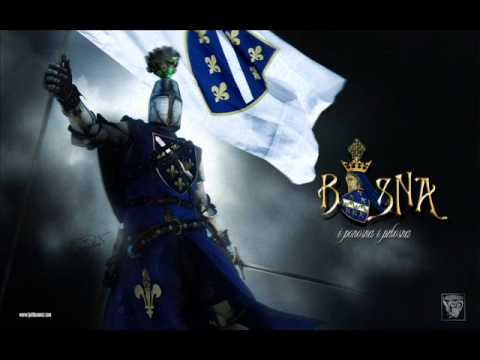
The Bosnian Serbs who lived in Bosnia and Herzegovina after the signing of the Dayton Agreement viewed the flag with the six fleurs-de-lys as only representing the Bosniaks (i.e. Bosnian Muslims) of Bosnia and Herzegovina. The flag of the state was ultimately turned into the current, submit-1998 flag. The present flag was launched by the UN High Representative after the Parliament of Bosnia and Herzegovina couldn’t decide on an answer that was acceptable to all events. Aside from the colours, the present flag accommodates no historic or different references to the Bosnian state. The flag isn’t ever seen in the Republika Srpska, whose residents choose to fly both that entity’s regional flag or the Serbian nationwide flag instead.
Bosnian Serbs additionally served in Austrian Army, and were loyal to Austria-Hungary when it came to Italian Front, however they usually abandoned and switched sides after they had been despatched to the Russian entrance, or to Serbian Front. After the autumn, Serbs were subjected to varied persecutions, war crimes, oppression and genocide at the hands of Muslims, including the infamous Devsirme system of forced assimilation, numerous Sharia inequalities, together with compelled labor, jizya, harsh taxation and slavery. Serbs settled the Balkans in the seventh century, and according to De Administrando Imperio (ca. 960), they settled an space near Thessaloniki and from there they settled part of right now’s Bosnia and Herzegovina. They inhabited and ruled Serbia, which included “Bosnia” (with two inhabited cities; Kotor and Desnik), and “Rascia”, and the maritime principalities of Travunija, Zahumlje and Paganija, the primary two having been divided roughly at the Neretva river (together with what’s today Herzegovina). The population’s Serbian ethnic id remains a matter of dispute and rather indicates political scenario on the time.
In the same month and city, unidentified individuals also threw an explosive system on the home of a Bosniak returnee. When police concluded that the assaults were the pranks of local youngsters, the local Muslim neighborhood called for the dismissal of the police chief for not performing a full investigation.
Bosniaks had been mostly expelled from the territory managed by the Serbs from 1992, however immediately after the war they demanded the restoration of their civil rights in those territories. The Bosnian Serbs refused to make reference to the Bosnian language in their constitution and in consequence had constitutional amendments imposed by High Representative Wolfgang Petritsch. However, the constitution of Republika Srpska refers to it as the Language spoken by Bosniaks, as a result of the Serbs had been required to recognise the language formally, however wished to avoid recognition of its identify. The first constitution of Bosnia and Herzegovina from 1910 explicitly talked about Serbs, Croats and Muslims because the “native peoples”.
